Match the page to what was searched
Local service landing pages usually underperform for one big reason. The page does not say back what the visitor typed. Someone searching "emergency AC repair Jacksonville" at 9pm needs to see emergency availability and the word Jacksonville in the first screenful. Not a general "Our Services" page that buries their urgent problem in a list of nine.
That means one page per service, per area you actually serve. Not one catch-all page trying to rank for everything. "Same-Day AC Repair in Jacksonville" as a headline does more work than "Welcome to Our HVAC Company." It answers the question the search implied. The same logic drives local SEO for Jacksonville businesses in general. Specific beats broad, both for ranking and for converting once someone arrives.
Strip the site navigation off these pages too. A full nav menu gives a visitor a dozen ways to wander off. A page with one clear action gives them one thing to do.
Trust signals that actually matter locally
For a local service, trust mostly means proving you are real, nearby, and accountable. A few things do that work well. A phone number visible without scrolling. License and insurance numbers where they apply. Reviews with real names attached. Photos of actual completed jobs, not stock images. A plainly stated service area listing the towns you cover.
Pricing transparency belongs on this list too. A range, like "most repairs run $150 to $300," filters out mismatched leads before they cost you a call. It also signals confidence to the people who are a good fit. Staying vague about price reads as something to hide.
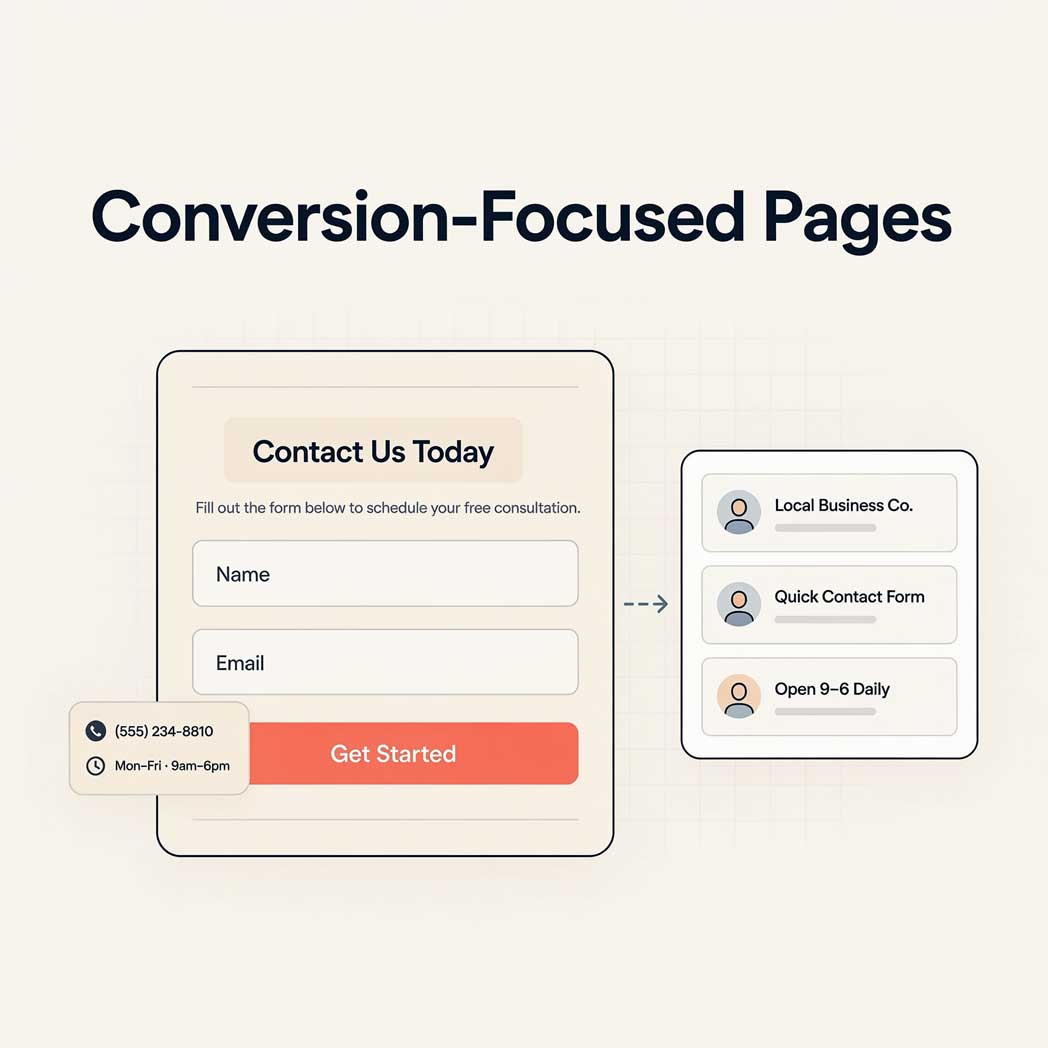
Form design, and the myth about form fields
The standard advice says fewer form fields always means more conversions. The real research is messier than that, and worth knowing before you gut your form.
Venture Harbour's roundup of form-length studies pulls results pointing both ways. Marketo cut fields and saw conversions rise. But when Michael Aagaard ran the same test for Unbounce, a shorter form performed worse. He had removed the fields people actually wanted to fill in, and kept the ones they did not. He restored the relevant fields, tested the labels instead, and conversions rose roughly 19%. In a separate MarketingExperiments test, a 15-field form beat an 11-field version by 109%.
The real lesson is not "short forms win." It is that relevance wins. A field that helps the visitor feel understood, like "what's the problem?", earns its place. A field that feels like data harvesting for your CRM does not. Cut fields that serve you. Keep fields that serve them. Test instead of guessing.
What a good conversion rate actually looks like
Know the real number before you judge your own page against one someone invented. Unbounce analyzed 41,000 landing pages, 464 million visits, and 57 million conversions. It found a median conversion rate of 6.6% across all industries, and treats 10% or above as genuinely good.
Those numbers are medians across every industry, so treat them as rough orientation, not a hard target. A page selling emergency service at 11pm behaves nothing like one collecting newsletter signups. The real point: if your local service page converts in the mid single digits, you are roughly where most pages land. That calls for steady improvement, not panic.
6.6%
Median landing page conversion rate across all industries, from Unbounce's analysis of 41,000 landing pages and 464 million visits. Anything at 10% or above counts as strong.
Measuring it properly
For local services, a large share of conversions happen by phone. Most default analytics setups simply do not record those. Count only form fills, and you are likely undercounting your page's real performance, then optimizing against a partial picture.
Getting this right means tracking calls as conversions, alongside forms. My guides to advanced GA4 tracking for local businesses and setting up Google Tag Manager cover that in detail. Once calls and forms both land in the same reports, testing headlines and calls-to-action starts telling you something real. And once leads are being captured reliably, automating the follow-up is what keeps them from going cold.
Common questions
Do shorter forms always convert better?
No. The research I walk through is messier than the standard advice: relevance wins, not length. Shorter forms sometimes lost because they cut the fields people actually wanted to fill in. Cut fields that only serve your CRM, keep the ones that serve the visitor, and test instead of guessing.
What's a good conversion rate for a local landing page?
Unbounce's analysis of 41,000 landing pages found a median of 6.6% across industries, with 10% or above counting as genuinely good. Those are rough orientation, not hard targets. If your page converts in the mid single digits, you're roughly where most pages land. Improve steadily, don't panic.
How many landing pages does a local service business need?
One page per service, per area you actually serve, not one catch-all trying to rank for everything. The page should say back what the visitor searched, so 'Same-Day AC Repair in Jacksonville' does more work than 'Welcome to Our HVAC Company.' Strip the site navigation off these pages too.
Why do my landing page numbers look worse than they are?
Because a big share of local service conversions happen by phone, and most default analytics setups never record those. If you only count form fills, you're undercounting the page's real performance and optimizing against a partial picture. Track calls as conversions alongside forms before you judge anything.
Does your homepage pass the three second test?
A visitor decides in about three seconds whether your site is for them. Put your address in and I will send you what a stranger actually takes from it, and the specific things to fix.
Scan my site free →Where to start
gravityGone builds websites and landing pages for local service businesses across Jacksonville and Northeast Florida, starting at $250, no long-term contracts.

Mike is the founder of gravityGone, where he helps small businesses in Northeast Florida grow through Web Development, SEO, and Marketing Automation.