The real case for self-booking
Articles about chat-to-calendar automation usually sell it on labor savings, often with a specific percentage attached and no source behind it. The genuine argument is narrower, and better evidenced.
Start with preference. A Gartner Digital Markets survey looked at US consumers who had booked a service appointment. It screened 412 respondents down to 217. Given the choice, roughly seven in ten said they would book online, against 22% who preferred the phone. 59% cited frustration with hold times or bad office hours.
Now the part that matters most for a service business. A study at Mayo Clinic Health System, published in JMIR, covered 13 months of appointments. It found that 29.5% of self-scheduling happened outside regular business hours. Nearly a third of the bookings landed when nobody was available to answer a phone.
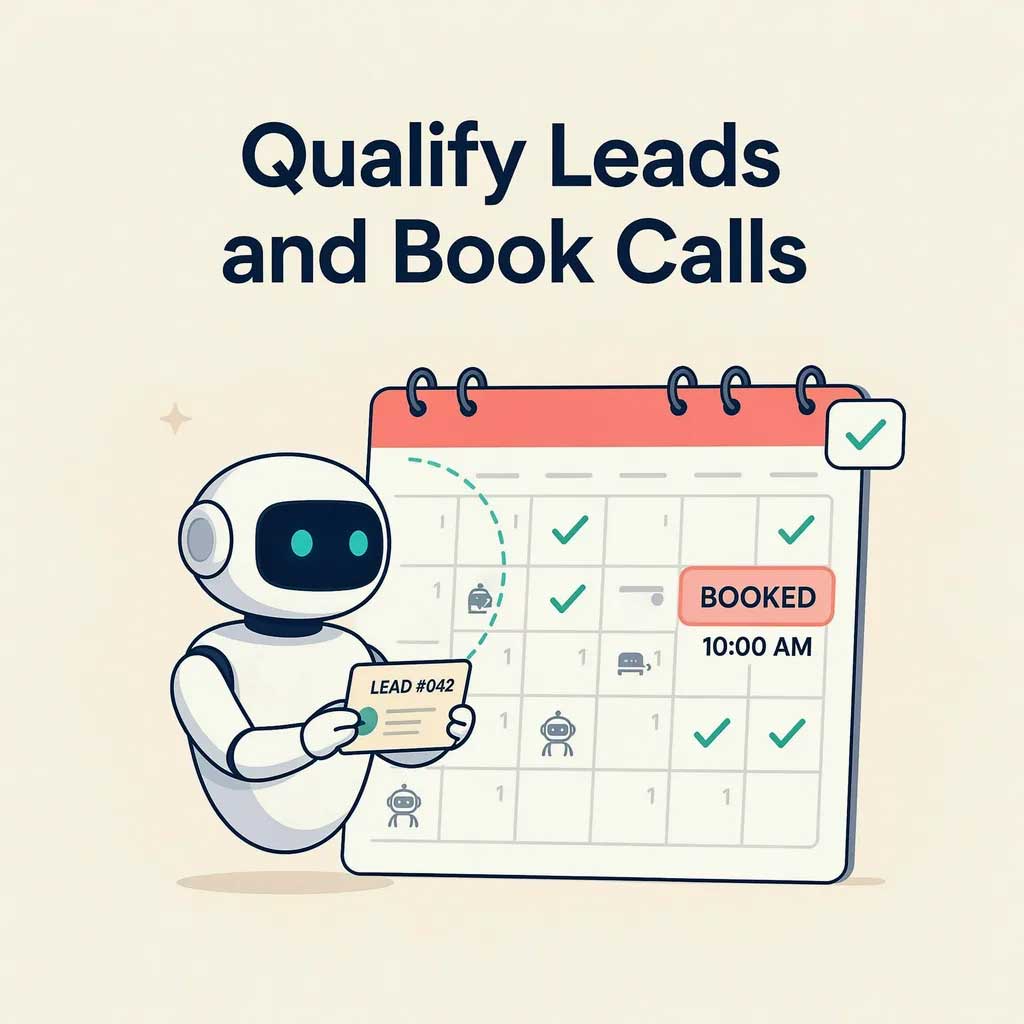
That's the real case. Not that automation replaces your front desk, but that it captures the roughly one in three people who are ready to commit at 9pm on a Sunday. Without it, they wait until Monday. By then, some of them have called somebody else.
The booking isn't the win. Catching Friday night is the win.
Why it earns its place
Nearly a third of self-bookings happen when nobody is there to take the call.
Does easy booking mean flaky bookings?
This is the sensible objection. If booking takes ten seconds and no human is involved, surely the commitment is weaker, and more people fail to show. It's worth checking before assuming it's true.
The evidence doesn't support it. The same Mayo Clinic study compared 912 self-scheduled appointments against 16,828 staff-scheduled ones. No-shows ran at 3.07% for self-scheduled, against 4.12% for staff-scheduled. That gap wasn't statistically significant (P=.12). Self-booking wasn't worse. If anything, it trended slightly better.
Two honest caveats apply. This is healthcare, where patients have more invested in an appointment than someone requesting a quote, so don't carry the exact rates across. The authors also note all patients received reminders, no matter how they booked. That doesn't mean reminders are optional. It means booking channel wasn't what drove the no-shows here.
Reminders have their own evidence, and it's more mixed than most vendors suggest. I go through the randomized-trial data in creating effective automation workflows, including the finding that SMS reminders specifically didn't reach statistical significance in the pooled analysis.
The mistake that kills these builds
Here is where most chat-to-booking systems go wrong. It's a design choice, not a technical failure.
The appeal of qualifying leads is obvious. You don't want your calendar filled with people who can't afford you, or need something you don't offer. So you add questions. Budget range. Timeline. Decision-making authority. Project scope. Property type. Each one feels reasonable on its own.
But every question sits between a ready person and the calendar. You apply friction right at the moment of highest intent, to people who already came to your site and started talking. The prospect who quits at question four isn't filtered out. They are just lost. You never learn whether they were qualified, because they never got far enough to tell you.
Here is a better rule: qualify only for what changes the booking itself. Does the answer decide who they see, how long the slot needs to be, or whether you even serve their area? Ask it. Does the answer only help your salesperson prepare? Collect it after the booking is confirmed, or let the person on the call ask it live.
In practice, that's usually two or three questions, not five. What do you need, where are you, and how soon. Everything else can wait until the slot is held.
Hold the slot first. Ask the rest later.
Building it
Decide what the chat is for first. Routing and booking. Not pricing, coverage, or diagnosis questions. The reasoning, and the survey data behind it, is in integrating chatbots for local business.
Show real availability from the calendar of whoever does the work. Build in travel time and buffers. A booking system offering slots your technician can't make is worse than none, because now you're cancelling on people.
Confirm immediately, and in writing. Cover what to expect, what to have ready, how to reschedule, and a real phone number. This is also the moment to ask anything you deliberately held back.
Write the booking into the same place as everything else. A chat booking that lives only in the chat tool is a second silo. It belongs in the same record as your form submissions and calls. That's covered in connecting forms, CRM, and calendar.
Keep the human path visible throughout. Not buried after a failed exchange. Some people will never book through a widget, and shouldn't have to fight it to reach a person.
Test the reschedule path, not just the booking path. Most builds get tested by booking once and calling it done. Reschedule and cancel flows are where these systems actually embarrass you, and people use them more than you expect.
A note on platform lists
A quick correction on tool recommendations you'll see elsewhere. Drift, a name that shows up in many chat roundups, was acquired by Salesloft in February 2024 and folded into their sales engagement platform. It's no longer the standalone product those older lists describe. Tool lists in this category age fast. Treat any of them with some caution, and check current status before you commit to one.
The durable guidance is structural, not brand-specific. Check what your existing CRM and booking software already include. One integrated tool beats two connected ones, and it removes a whole category of sync failure. If you do buy something separate, confirm it writes into your CRM natively before you check anything else. Start with rule-based flows rather than a language model. Routing and booking are predictable paths, where branching logic is more reliable and far easier to debug.
Guardrails and failure recovery
- Protect the calendar. Enforce buffers, respect existing events, set business hours and blackout dates, and cap same-day bookings at what is realistic. Double-booking is the failure customers actually feel.
- Validate before holding a slot. Check that contact details are real, and quarantine anything suspicious. An open booking flow is an easy target, and a calendar full of fake appointments is expensive.
- Escalate on uncertainty. When the system can't tell what someone needs, hand off to a person instead of guessing at a booking type.
- Never lose the transcript. Whatever the customer typed should land in the record with the booking. Making them repeat it to a human afterward is self-inflicted, and one of the most-cited complaints about automated service.
- Fail into a human queue. If the calendar integration breaks, the request should still reach somebody who can book it by hand. Silent loss is the worst outcome available.
- Alert on silence. Zero bookings in a normal week looks identical to a slow week. Watch for missing activity, not just errors.
What to measure
Bookings is the obvious metric, and on its own it's misleading. Track the whole pipeline instead:
- Chats started, and how many reached a booking. The gap between those two numbers tells you whether your questions are filtering people, or just losing them.
- Where people drop out. If quitting clusters around one question, that question is the problem. This is the single most useful number in the whole build.
- Show rate. Given the research above, expect it to land close to phone bookings. If it's much worse, something specific is wrong with your confirmations or slot quality, not with self-booking itself.
- After-hours share. If a real share of bookings land outside business hours, the system is doing the job it was built for.
- Bookings that turned into real work. The only number that actually pays anyone.
Skip the ROI timelines you see quoted elsewhere. Whether this pays back in two months, or never, depends entirely on how many after-hours inquiries you currently lose. Measure that directly. Don't trust a range from someone else's business.
Your numbers or nobody's.
Common questions
Is a chat booking system worth it for a service business?
The real case is after-hours capture. In the research I cite, nearly a third of self-scheduled bookings happened outside business hours, when nobody's there to answer the phone. Those people either book themselves at 9pm or wait until Monday, and some of them call somebody else by then.
Do self-booked appointments no-show more often?
The evidence says no. The Mayo Clinic study I cover compared self-scheduled against staff-scheduled appointments, and self-booking actually trended slightly better on no-shows. It's healthcare data, so don't carry the exact rates across to a service business, but the booking channel wasn't what drove missed appointments.
How many qualifying questions should the chat ask?
Usually two or three, not five. My rule: ask only what changes the booking itself, like what they need, where they are, and how soon. Every extra question sits between a ready person and your calendar, and whoever quits at question four isn't filtered out. They're just lost.
What should I measure besides bookings?
Track the whole pipeline: chats started versus chats that reached a booking, where people drop out, show rate, after-hours share, and bookings that turned into real work. The drop-out point is the single most useful number, and skip anyone else's ROI timeline. Measure what you currently lose instead.
Does your homepage pass the three second test?
A visitor decides in about three seconds whether your site is for them. Put your address in and I will send you what a stranger actually takes from it, and the specific things to fix.
Scan my site free →Losing the people who are ready at 9pm?
I build chat and booking flows for service businesses across Northeast Florida, scoped to capture intent rather than interrogate it.

Mike is the founder of gravityGone, where he helps small businesses in Northeast Florida grow through Web Development, SEO, and Marketing Automation.